Showing posts with label Pests and Diseases. Show all posts

Tuesday, January 6, 2015

2014 Heirloom Tomato Review

If you read my last post and wondered why I hadn't grown any tomatoes this year - well here they are!!  I grow so many tomatoes, most of them heirloom, that I write a separate post dedicated just to them.

It's always a colourful harvest
Heirloom tomatoes vary so much in colour, shape and taste that we often find ourselves spending hours comparing them for flavour, suitability for cooking and storage.  I try new varieties each year and then we have to compare against old favourites.

Let's see what this year's crop brought us and how they stack up against past years.

To start I should mention that once again the garden was hit with early blight.

The tell tale spots on tomato leaves indicates early blight
Black spots appeared on the leaves close to the main plant stalk in late July.  Those leaves began to die back and then the spots spread.  Eventually it will kill the whole plant.  The good news is that early blight can be dealt with.  Plucking the affected leaves and properly disposing of them can help to stop the spread of the disease.  Also dispose of the mulch around plants as that can harbour the fungus.  I didn't bother plucking leaves and I think that has contributed to my ongoing problem with this fungus.  I need to be more diligent in future.  Even so, the fruit still forms on the plants and is edible and by properly fermenting the seeds you can still collect seed for planting.

Thus far, the only tomato that shows any resistance to this fungus is Mexico Midget.  It isn't entirely resistant but it's better than most.  I actually didn't plant Mexico Midget this year but I had plants regardless.  This plant is more shrublike than any tomato I've ever seen and it produces fruit in the hundreds.  Tiny currant sized fruit that drops all over and replants itself year to year.  I found about 3 Mexico Midgets hiding amongst the onions and the beets, and in bed with the cucumbers.  The only downfall is that these self seeded plants start out late and never fully mature enough to provide a good crop of fruit.

A bowl full of 'cherries'
Yellow Pear also weathered the fungus storm slightly better than most of the other plants.  Beautiful little fruits, they are adorable to look at.  Not terribly sweet, meaty as yellows tend to be but they don't 'taste' yellow Jody says (whatever that means!)  I found them sweet in comparison to a regular large tomato but not so sweet that is really noticeable.

We had one more 'cherry' sized tomato and that was Chadwick Cherry.  These small red tomatoes had good disease resistance and were quite prolific.  The fruit is a little larger than normal for a cherry, and not very sweet but instead has a tangy flavour.  We did enjoy them and they produced a decent haul of fruit in a bad year but I'm still looking for a cherry tomato that will blow my socks off.

The tomato with the worst resistance this year was Copia.  Most of the plants were killed outright.  The couple that survived produced beautiful fruit.  Big fat globes striped in orange and yellow. A champagne of tomatoes Jody called them.  A very bright, light citrusy taste that I adored but considering how badly they did in my garden I'm not sure I would grow them again.

Copia produced large yellow and red striped tomatoes
I have had good disease resistance from Black Plum tomatoes in the past but this year the blight proved too much for them.  We collected only a small amount of fruit but regardless this is my favourite tomato and I will continue to grow it.  The small fruit is perfect for dicing onto salads and the strong smoky flavour is fantastic in everything from soups to salsa.

Kellogs was my least favourite this year.  These large yellow tomatoes ripened early and while not bad to eat I much prefer German Gold and Woodle Orange which we have grown in previous years.  In addition to inferior taste they also suffered from blight and blossom end rot.

From the Left - Clear Pink, Kellogs and Bison
On the other end of the spectrum, Paul Robeson was probably my favourite tomato this year.  They took forever to ripen but when they did we loved them.  This is an excessively large purple tomato with that strong smoky taste that the purple tomatoes seem to have.  That strong taste is delicious in soups and chilli.  Jody called them the merlot to Copia's champagne.  Blight knocked them back but didn't utterly destroy them.

From the far left - Paul Robeson, Clear Pink, Chadwick Cherry, Yellow Pear and Mexico Midget
A bowl of Bison and Copia in the background
For those more interested in traditional tomatoes we had a good year with Clear Pink.  These are rosy pink fruit of regular size and shape.  They had reasonable disease resistance and are just a good all round tomato for whatever needs you have.

The final contestant is Bison.  and really, it's not much of a contest.  I've grown Bison in previous years and Jody keeps begging me to plant them every year.  Bison is a traditional red tomato, good for fresh eating, cooking, whatever you need.  It's best trait is that it's a bush type tomato that  produces vast quantities of tomatoes early in the season and all at once.

There's always plenty of Bison to go around
If you're making soup this is what you need.  A large haul of tomatoes to fill the pot.  The plants were a mess from blight but we still did collected a great number of fruit so it's still a win in my books.

Do you grow heritage tomatoes?  Do you have a favourite variety?  I would love to hear your preferences and recommendations.

Thursday, January 1, 2015

2014 Vegetable Garden Review

I started planning for next year's vegetable garden over the Christmas break.  Figuring out what seed I need to order, where to rotate the crops to next.  I always find it helpful when planning ahead to look at the past year.  Reflecting on what went wrong and what went right helps to plan for what to do next.

A sample from the summer garden
Some plants I have *somewhat* mastered and know what to expect from year to year.  Once again I harvested more carrots than we could eat.  Beans, garlic, basil, dill and lettuce were in abundance as well.  The amount of cucumbers I grew was unreal.  We give away cucumbers like some people do with zucchini.  I grow Tasty Jade cucumbers and they seem resistant to mildew, bugs, hot, cold, wet - anything you can throw at them.  One plant produces a half dozen long english style cucumbers per week in peak season.  We did so good that I took bags of food to the Upper Room Food Bank this year on an almost weekly basis.

Pole beans covered the trellis in no time
Speaking of zucchinis, we didn't get a single one this year.  Not one.  It seems impossible.  They are one of the easiest plants to grow and they produce in vast numbers.  So what happened?  Well the plant grew and started to flower and just when I thought we would get a zucchini ...... I found mould. Fruit rotted, stems dropped off and the whole plant died.  Powdery mildew was to blame.  I had only planted a single plant so we didn't have a back up.  I was reduced to purchasing zucchini at the Farmer's Market.  the shame.

Another disaster was the asparagus.  I planted asparagus seedlings the first year we started this garden.  I've been hoping for asparagus every year since and I am finally throwing in the towel.  Next spring I'm digging them up and giving them away.  The plants are healthy enough but the perennial weeds in my garden keep choking them back so that they never produce enough spears for eating.  I can't get rid of the weeds without dousing the whole place in chemicals so the asparagus will need to go.

Each year I try to grow something new to me and stretch my abilities.  Sometimes it's a small change.  Like garlic.


I discovered a garlic grower here on PEI last winter.  Eureka Garlic grows around 70 varieties of garlic and I just had to try some of them out for myself.  I planted my usual crop of Music.  Then I purchased French Rocambole and Chinook to trial.  Another variety, Susan Delafield, was gifted to me.

 
Chinook was a miss, the bulbs never formed properly.  But I loved French Rocambole and the extra large bulbs of Susan Delafield.  Some of the best bulbs were put aside and planted in the fall for next year's crop.

A new variety of pumpkin was also grown this season.

Queensland Blue Pumpkins 
I've grown a new variety of pumpkin almost every year we've been here and have yet to decide on one I love.  I first tasted blue pumpkin years ago when I travelled in Australia.  It was my first exposure to pumpkin as a vegetable for eating and not carving.  My memories of those pumpkins drove me to search out Queensland Blue Pumpkin seed for this year's garden.  The vines were large and the yield was low but what a pumpkin!  Beautiful flavour when used in soup.  I am saving seed from these and will continue growing them in future.

I also tried watermelon this year.  It was a long shot but I thought some fruit would be a nice change.  The Yellow Doll seeds sprouted but the plants just never took off.  I collected a couple watermelons the size of golfballs and that was all.  Too cold perhaps.  I picked up some melon seeds at a recent seed exchange and will keep trying for melons next year.

Something completely and entirely new to me was soybeans.  I've never grown these before but will definitely be trying them again.

Gaia Soybean
I found these seeds at a seed swap and planted a half dozen plants to test.  My only problem was I didn't pick the beans early enough and they were starting to harden when I finally got to them.  These are best picked young and eaten with a little salt and butter.  YUM!

Another new to me plant was kale.  I know, this isn't new to most people.  For some reason though I've never eaten kale in my whole life.  Don't know how I missed it but there you go.  At the same seed swap I took a packet of kale seeds on a whim.  and now I love kale.

I've struggled with onions for the past few years.  Starting my plants from seed in the depths of winter, coaxing the seedlings along for months only to see half of them die as soon as they hit the ground.  This year I bought seedlings instead and although it was expensive it was worth it.

messy garage and string upon string of onions
We ate onions all through the summer, donated some and then I dried around 50 or so of them in the fall to keep for the winter.

You know what else did well.  Beets.

Bull's Blood beets have beautiful red leaves
Beets are one of those things I don't seem to have the knack for.  This year was an exception.  I bought new seed for Bull's Blood beets and they grew like I have never had beets grow before.  Maybe it was the fresh seed, maybe the soil is finally healthy enough to support them - I don't know the reason but we had beets galore....  and we discovered we're actually not all that fond of beets.  We don't dislike them.  They're lovely diced fresh onto a salad or roasted with other root vegetables.  But we don't like them enough to eat handfuls of them throughout the summer.

Same went for parsnips.  I finally grew parsnips and I was so pleased.  Not very many but more than we needed.  Parsnip is nice occasionally but not regularly.  Not sure I'll bother with these again.  I would rather plant extra of things we love than waste space on things we only eat occasionally.

Another veggie I try and try to grow well is rutabegas.

This rutabaga looked exactly like a pair of dancing legs to me
I had better success this year but my soil still isn't healthy enough to produce good specimens.  Brown-heart can be found each time I slice one open.  The issue is lack of boron.  I've read about adding Borax to the soil to alleviate this problem but it sounds dangerous as too much can be toxic.  I'm hoping that manure and seaweed additions to the soil will eventually solve this issue.

Overall it was another good season and we collected loads of food to eat fresh and store for the winter.  Today the weather is cold and the garden is sleeping for the winter but we're still enjoying steaming bowls of soup and slices of apple pie.


It doesn't get better than that.

Friday, July 19, 2013

Triumphs and Tragedies

It's been awhile since I went on walkabout on a Friday night and perused the garden.  Tonight was the perfect night for a stroll as the weather has cooled considerably.  Even my little buddy decided it was a good night to tag along.


I collected another bouquet during my travels.  


Peonies have given way to roses and veronica.  The lady's mantle is still blooming strongly and provides plenty of filler.

I had this notion in the spring that if I could just get the vegetable garden underway it would be self regulating until fall when I would gather up all the tasty food.  Good grief I'm more than a little naive some days.


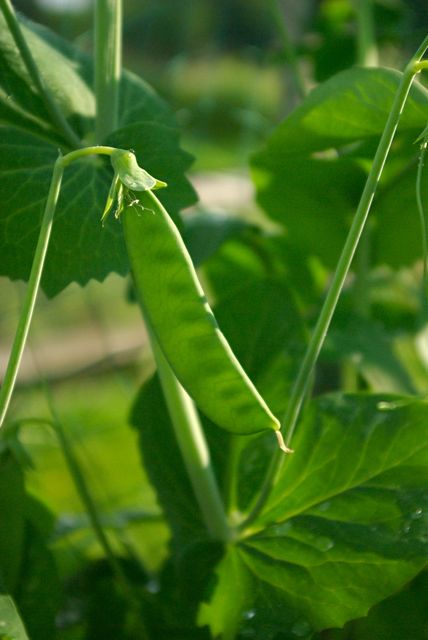
I have been picking peas all week and I noticed tonight I have to get back in there again.  In fact there's probably another week of picking before we're through.  It's a double edged sword.  Fresh peas taste out of this world but it means the rest of the garden gets neglected... again.

Which means I didn't notice this until it was too late.


My new copper beech is in trouble.  The leaves are all dried and shriveled.  I have watered it now but the damage is done.  The real trouble was that this tree didn't have a good root system when I bought it.  I was not impressed when I removed it from the pot.  Far too little roots for such a large specimen.  I won't be visiting that nursery again.

The beech was not the only tragedy this evening.  The odd looking echinacea have morphed into alien species.


I've been wondering for a weeks now what the heck was going on with these plants.  They just look worse and worse.  Yellow coloured skinny leaves, bug holes, dying leaves - they don't look like echinacea any more.  Two plants are affected.  I'm new to echinacea so don't have a clue what's going on.  Any ideas what the cause is?

For those following the sordid tale of my composting mishaps - I finally gathered my courage and visited the compost bin these evening.  Yes, it has been several weeks since I last opened up the bin.  I felt sick every time I thought of digging through that again so I've been avoiding it.  Tonight though I thought - put on your big girl panties, you can do this.

The good news was I did not see a single mouse nor hear any squeaks.  I did however find snakes.  PLURAL.  They reared up at me when I poked them.  I did not get a photograph.  I think the rule from here on in when visiting the compost bins is always bring back up.  One person to hold the camera and one person to carry a shovel to fend off any enraged critters.

This is a much nicer view than snakes
Who knew composting could be so adversarial?  It feels a bit like chasing out unwanted squatters.  Although I should probably thank the snakes for taking care of the voles so efficiently.

One last stop was made at the very front of the property.  I'm starting a new garden bed there.  There's a slight dip that I have noticed gathers water when it rains.  So a couple willows were planted, including this very pretty Hakuro Nishiki dappled willow.


In addition to the willows I had an idea that some butterfly friendly plants would be a good idea.  To that end I brought home some Bee Balm from the plant sale in the spring.  I'm sure I asked about the colour and I could have sworn it was supposed to be pink.  Which would have gone quite nicely with that dappled willow.  This is what I found tonight.


Quite beautiful, but definitely not pink.

Monday, July 1, 2013

GOOPS - Misadventures in Composting

I've spent a lot of time this past week weeding.  On my hands and knees, covered in dirt, face first in the posies.


One of the downsides of digital cameras is how darn quiet they are.  Makes it much easier to sneak up on one's spouse and take a photo.


Caught sitting down on the job.

Weeding is contemplative work.  Time to daydream, consider the great questions that life presents and wonder what the heck is that plant doing there?


Sometimes it's lettuce that grows up through the flowers.  Cilantro is another culprit.  I have weeded out ten times more dill this spring than legitimate weeds.

Dill with its large flower heads produces a lot of seed
My trouble is composting.  I compost just about anything.  Kitchen scraps, weeds, vegetables gone to seed and the dried stalks of last years blooms.  With this mix I add manure, straw and sawdust among other things.  But I'm not terribly careful.  Sometimes there's more weeds than manure, less sawdust than kitchen scraps.  In a carefully controlled bin with equal parts of brown and green matter the compost would get hot and wayward seeds would be killed off.  However, mine rarely does.  Instead it gets nice and warm and provides the perfect germinating conditions!

Then I spread all that compost around my garden and all sort of chaos ensues.  It's not necessarily a bad thing.  I've had some beautiful oops moments.  Like the bleeding heart that decided to make itself at home next to my birdhouse.


Or the pink lupines that showed up this year behind the hosta.


This week particularly has been bountiful in terms of plant finds.  Cilantro next to the hydrangea, lettuce mixed among iris, birch seedlings, dill, and then ... holy hannah WHAT is that?!?


If anyone knows what plant this is can you please let me know.  I'm stumped.  There's a number of them blooming and they're quite pretty.  But I haven't a clue what it is or where it came from.  I know I didn't put this in my compost so where did it come from?

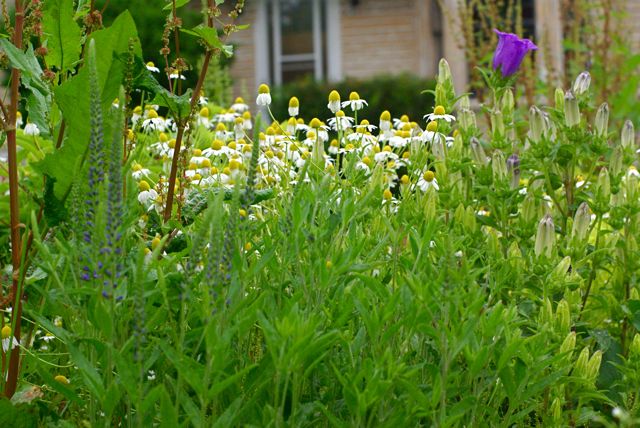
Even stranger, I also found veronica growing.  That wouldn't normally be so weird but I didn't put it there.

All these plants are volunteers!  Veronica on the far left, chamomile in the center
and those funny puffy purple blooms on the right
There is veronica in my garden but they are hybrids and the seed should be sterile.  or not I suppose?  Life's a mystery.

Despite the unexpected treasure there is a downside to all this madness.  I decided to do a little work in my compost bins this week.  I got out my pitchfork intending to turn it over, make sure things were breaking down.  I got a bit of a surprise.  Those nice warm conditions are not only good for germinating seeds, they make a nice nesting spot for voles.

There are no pictures for what occurred next.

Let's just say there may have been some screaming... and squeaking.  I'm not sure how they got in.  I had specifically chosen a very small wire screen for the bin in order to avoid just this scenario.  Somewhere there must be a gap.  I should have dealt with the matter right there and then but instead I closed the lid and walked away.  The image of skewered vole was a bit overpowering.

Now, several days later I'm rather reluctant to visit the bin again.

any suggestions?

*********************************************************************

For more GOOPS (Gardening OOPS) please visit Joene's Garden where we share the trials of gardening on the first of each month.

Saturday, November 24, 2012

2012 Vegetable Garden Review - The Tragedies

Vegetable gardens consist of mainly annual plants which we harvest or pull out at the end of each season.  This is a fantastic opportunity to start fresh each year.  I learn from the previous years problems and plan on changes for the season ahead.

The weather is finally taking a turn for proper cold this week and it's time I took a look back at the 2012 gardening season.

Late frosts killed some early seedlings
Overall I really don't have any major complaints this year.  After 3 years of expansion the space I have cultivated is quite substantial and I'm able to grow most everything I want.  However, I'm still working on getting the soil to a point where it's nutrient rich enough to support heavy feeding vegetable crops.  In one particular bed I added bonemeal, bloodmeal, lime, manure and compost.  After a lot of work that bed finally produced a decent crop of spinach.  But that kind of work needs to be done to every bed.  Something I haven't yet accomplished.

This resulted in yet another poor year for beets and rutabagas.

Cuttings from a rutabaga with brown heart
My beets continually germinate and then refuse to grow.  I'm lucky to get more than 4 or 5 beets every year.  Rutabagas grew but were continually bothered by cabbage caterpillars and when I finally got a look at the roots they were riddled with brown heart.

Good soil promotes healthy plants so before anything else I need to keep working on that soil so that my plants are better able to fend off pest attacks.

Another issue this year has been weeds.  I have a real problem with sheep sorrel on my property.


This perennial weed spreads very aggressively via rhizomes and I have a really hard time keeping it out the veggie beds.  Even the raised beds are no match for this beast.  I really don't have an answer to how to deal with this.  Short of spraying all three acres with Round Up (which is not going to happen) perennial weeds are here to stay.

A big issue in spring was poor germination.  It seemed to be a combination of bad seed and bad conditions.  We had so little rain throughout the spring and summer and although I did water I don't think it was enough.  The result was a handful of stunted parsley plants, a dozen carrots, and a pretty gappy looking row of peas.  I will be throwing out a number of seed packets and starting fresh next season and remembering to water well those first weeks seeds get planted out.

There were supposed to be peas in that bed
My last big issue this season was onions.  Some days I question my sanity when it comes to onions.  I have never grown a satisfactory onion and yet every year I try to no avail.  If anyone out there has some advice with regard to onions I would be forever grateful.  I have tried seed and I have tried sets.  I have tried different varieties in raised beds and in the ground.  Each year the plants grow a few inches and then suddenly shrivel up and die.  Is this another issue with my soil or is there something else going on here?  One day I hope to solve the puzzle.

Sunday, September 30, 2012

Time Marches On

The inevitable reds of fall
It's hard to believe we're deep into fall already.  Feels like just yesterday I returned from summer vacation.

Cheery blooms and bright colours greeted me August
It was dry and dusty in August, dirt hard as a rock after two months with next to no rain.  Digging weeds and moving plants was next to impossible.  Hurricanes Isaac and Leslie changed that.  While we didn't suffer any damaging winds this year we did get the rain, which was desperately needed.  In fact we received as much rain in one single afternoon as we had for the months of July and August combined.

Much needed rain finally brought forth dahlia blooms
And now on the final day of September I'm wishing the rain would stop already!  Mother nature has turned around and for all the rain we missed during the summer, it is pounding down now.  It does mean there is a flush of blooms which is always wonderful.  This Limelight Hydrangea is pushing out new lime green blooms next to aged pink ones.

Limelight Hydrangea with new and old blooms side by side
But it also means getting work done in the garden is difficult.  The ground is no longer hard packed but muddy.  Even on days when it isn't raining there is not much to be done as I'm causing more of a mess than anything.


Even the plants are having some difficulty.  Rust has shown up on some plants and these monkshood in the photo above appear to have almost mouldy looking tops on the flowers.

I'm hoping for a little relief come October.  A few clear days on a weekend or two would be divine to finish cleaning up the vegetable garden.  Rather than ignoring this chore, as I did last year, I'm hoping to get the veggie garden tucked up proper this season.  Hopefully that will mean come spring I'll be ready to get a headstart on cool season vegetables.

A number of beds have been cleaned out
and 'bedded' down but there's still lots left to do
Despite my best intentions I never did finish my flower garden this season.  Too dry conditions made edging and digging impossible and now muddy conditions are also making the same chore quite difficult.


The black mulch clearly shows what got done and what didn't.  This photo is looking back at the 'finished' portion.  Although in all honesty, I have gone back to the supposedly finished side on numerous occasions and moved plants that I can already see were planted too close.  I planted bulbs in the rain recently too.  Adding Golden Echo daffodils, tulips and Allium roseum to the mix.  This project will likely have to be finished next season though as along with rain we are running out of daylight hours.


Much like the bees swarming the Hummingbird Mint these days it's a race to see how much can be accomplished while the light and warmth still remain.

Sunday, September 9, 2012

Why are my Apples Falling Off the Tree?

I returned home from my vacation in mid-August and was surprised to see apples on the ground.

Why are those apples on the ground in August?
While it is close to apple harvest season, most of our crop doesn't start to ripen until late September.  This was a full month ahead of schedule.  A quick check confirmed it wasn't just one tree either.  It seems every tree in the orchard (over 20 trees) were losing their loads.

It's been a funny summer, hot and desperately dry.  Was it possible the apples had actually matured earlier than normal and were dropping off due to ripeness?

These apples are bright red and LOOK ripe
Taste tests revealed otherwise.  They are hard and bitter and suitable only for the compost heap.  Close inspection revealed a few other details.


If you take a close look at the photo above you'll note some issues.  This apple is small and lumpy with odd blackish streaks on the skin.  Others were mishapen.


So why are almost full size unripened apples falling right before harvest time?  and why do they look so deformed?

I had a suspicion but I needed to check the internet first to be sure.  I have noticed other plants, most obviously the dahlias, were not producing flowers this year.  The only difference from other years is lack of water.

And sure enough the internet confirmed my instincts.


Apple trees often drop their fruit in June (see my post on June Drop), dropping any excess fruit the tree cannot support throughout the season.  Back in June this year things were proceeding along quickly but normally.  The trees had bloomed in May and by June fruit was forming.  The weather was warm but there was still some rain in the forecasts.

Blooms in May
That changed though.  By July the temperatures were consistently in the mid to high twenties (celsius) and no rain was coming at all.  That got worse in August as the temperatures climbed higher and humidity set in, still with no rain.

What has happened to our flowering plants and our apple trees is that flowers and fruit require water to form.  In the case of fruit it requires a lot of water.  When you bite into an apple what is it you first taste?  Juice.  Juice that is derived from water.  But plants also require water in order to survive.  Similar to June Drop, the trees have chosen to keep water sources to save themselves and are dropping fruit they cannot support.

Cleaning up the fallen fruit
But why is this happening so late in the year?  What the internet confirmed for me was that apple drop, just before harvest, is common on trees affected by water stress.  The trees don't know when it will rain again so they hold out, producing fruit and only dropping it when it becomes clear they can no longer support it.

As for those small, awkward looking, lumpy apples.  I discovered that orchardists check fruit circumference and condition throughout the season as a measurement of water stress.  Had I bothered to look earlier I would have noticed this as a clear indicator of water stress.  Something for me to note in future years.